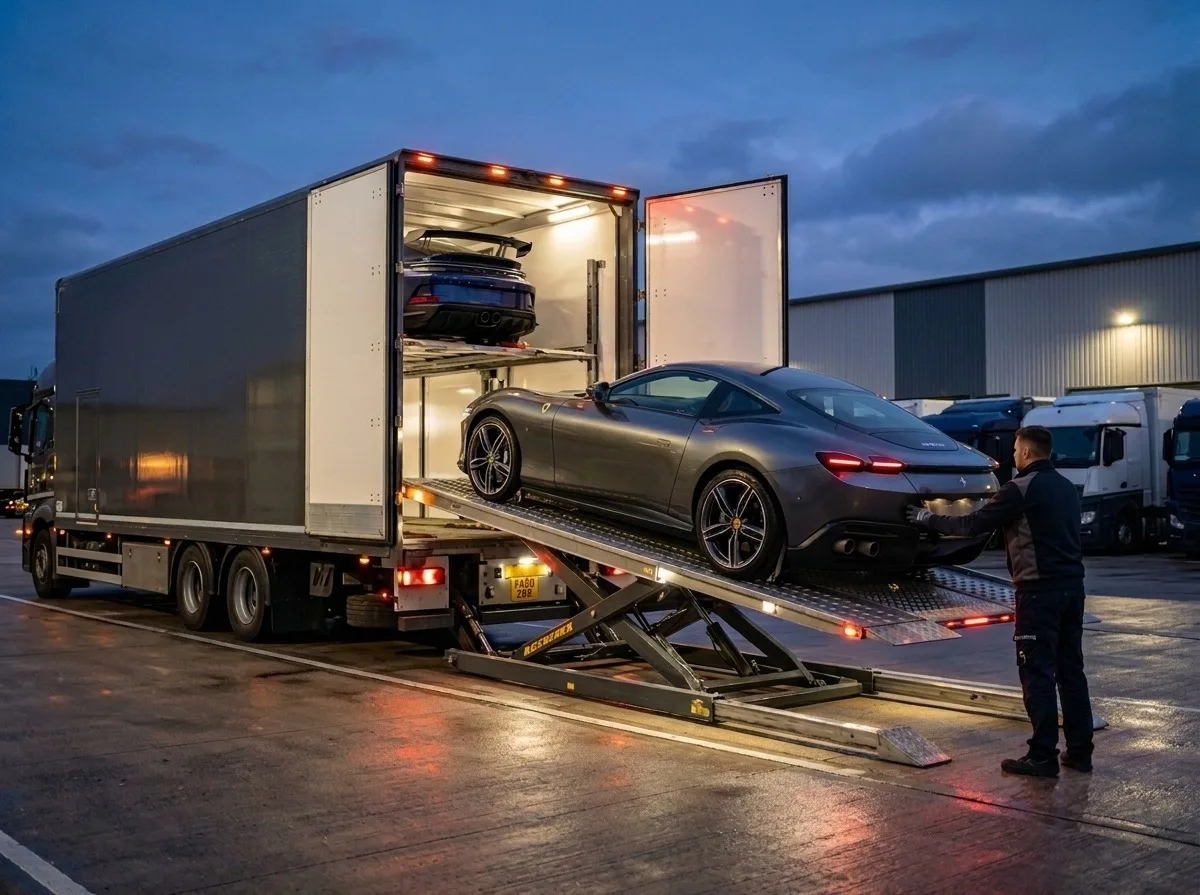

When you're ready to ship a car, one of the first questions you'll face is: open or enclosed transport? The answer depends on your vehicle type, budget, and how much protection you need during transit.
What Is Open Auto Transport?
Open transport is the most common method of vehicle shipping in the United States, accounting for roughly 90% of all auto transport shipments. Your vehicle is loaded onto an open-air, multi-level carrier — the same kind you see hauling new cars from manufacturers to dealerships.
Typical cost: $0.50–$1.00 per mile. For a coast-to-coast shipment (roughly 2,700 miles), expect to pay between $700 and $1,500.
Open carriers carry 6–10 vehicles at a time, which keeps costs lower. Your car is exposed to weather and road debris during transit, but this rarely causes damage. The vast majority of vehicles shipped every day — including Teslas, BMWs, and Fords — travel via open carrier without incident.
What Is Enclosed Auto Transport?
Enclosed transport places your vehicle inside a fully covered trailer, shielding it from rain, UV exposure, road debris, and the elements. Carriers typically hold 2–6 vehicles and are used almost exclusively for high-value or irreplaceable vehicles.
Typical cost: 30–40% more than open transport. Coast-to-coast enclosed transport averages $1,000–$2,200 depending on the carrier and timing.
Enclosed trailers also typically offer enhanced security features, white-glove handling, and often come with higher cargo insurance limits — important peace of mind for a $200K+ vehicle.
Side-by-Side Comparison
| Feature | Open Transport | Enclosed Transport |
|---|---|---|
| Average Cost | $700–$1,500 | $1,000–$2,200 |
| Weather Protection | Exposed | Fully covered |
| Carrier Capacity | 6–10 vehicles | 2–6 vehicles |
| Best For | Standard everyday vehicles | Luxury, classic, exotic cars |
| Availability | High — more carriers | Lower — fewer carriers |
| Transit Time | Standard | Standard to slightly longer |
When Should You Choose Open Transport?
- Your vehicle is a standard sedan, SUV, truck, or minivan
- You're cost-conscious and want the most affordable option
- You need a carrier quickly — open transport typically has faster availability
- Your vehicle is under $50,000 in value
When Should You Choose Enclosed Transport?
- You're shipping a luxury, exotic, or classic/collector car
- Your vehicle is a low-clearance sports car or has custom modifications
- You're shipping in harsh weather conditions (winter routes through mountain states)
- You need maximum peace of mind and higher insurance limits
The Bottom Line
For the vast majority of customers, open transport is the right choice. It's safe, affordable, and gets your vehicle where it needs to go. But if you're shipping a Lamborghini, a 1967 Mustang, or a vehicle with significant sentimental or monetary value, the premium for enclosed transport is well worth it.
At Neon Auto Transport, we offer both options with guaranteed pricing, no upfront deposit, and direct access to your carrier. Our team can walk you through the best option for your specific vehicle and route.
Ready to get an instant quote?
We'll match you with the right carrier — open or enclosed — at a guaranteed price.
Get My Free Quote →
Shazil Ali serves as Director of Operations at Neon Auto Transport, overseeing vehicle shipping operations, carrier coordination, dispatch management, logistics workflows, and customer transportation solutions nationwide. He reviews transportation guides, route pages, service content, and educational resources to ensure accuracy, transparency, and alignment with current auto transport industry standards.