📋 Open Auto Transport at a Glance
What Is Open Auto Transport?
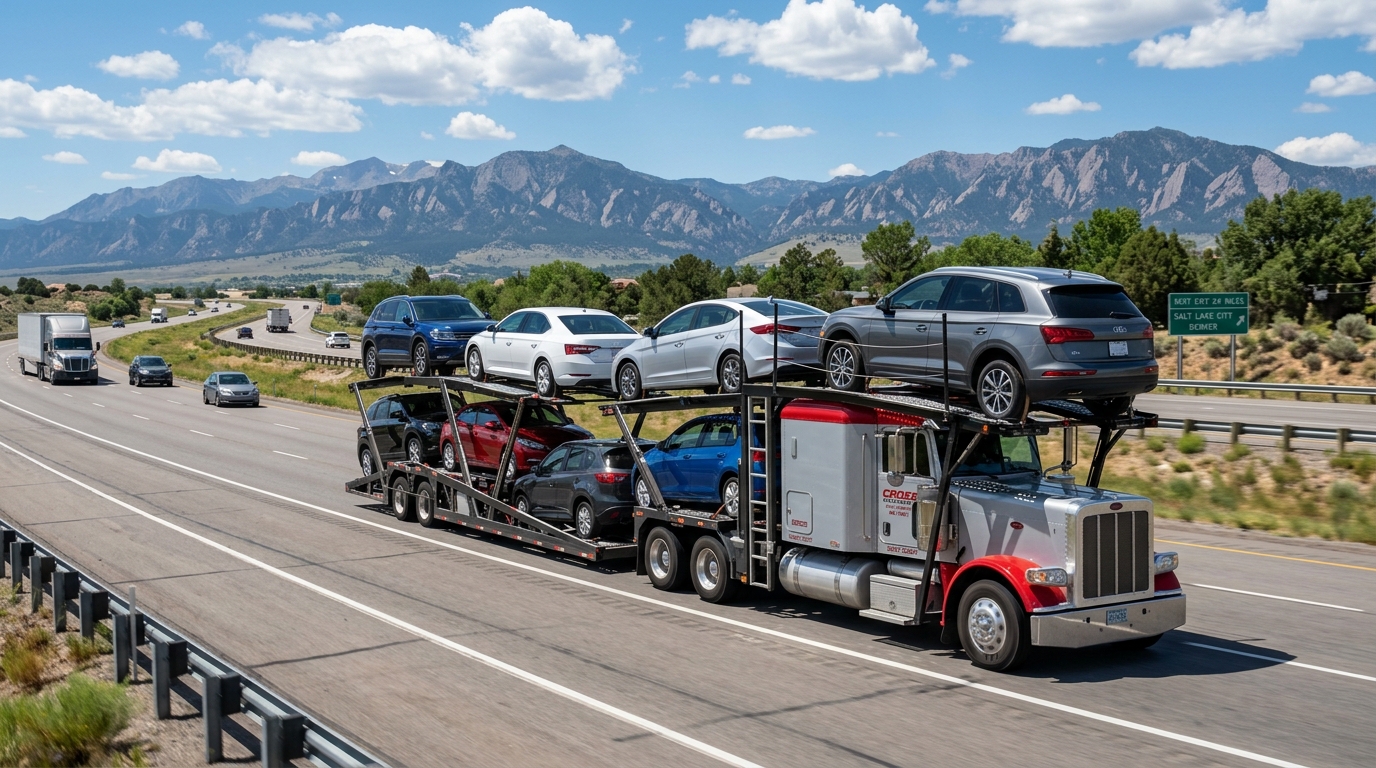
Open auto transport is a vehicle-shipping option in which a motor carrier loads vehicles onto an uncovered multi-car trailer. It is one of the most common ways to move eligible vehicles nationwide.
It is commonly used for everyday vehicles, dealership inventory, relocations, and online vehicle purchases. Vehicles remain exposed to weather and road conditions during transit, similar to normal highway driving.
Exposure to normal weather and road conditions does not mean the vehicle is expected to experience damage; carriers use standard loading and securement procedures to transport vehicles safely.
Open Transport, Open Carrier, Open-Air — Same Service
Open auto transport goes by several names depending on who you ask: open carrier transport, open trailer transport, open-air car shipping, open carrier auto transport, also referred to as open carrier car shipping or open air auto transport — all describe the same method: your vehicle secured on an uncovered, multi-car trailer alongside 6–9 other vehicles. Whichever term you searched, the service, pricing, and process on this page are the same. The trailer itself is sometimes called an open auto transport carrier, operated by a licensed motor carrier the way ours are — FMCSA-registered and verified before your vehicle is dispatched.
Explore our full range of Vehicle Transport Services or compare Door-to-Door Car Shipping options.
Why Choose Neon for Open Auto Transport?
We operate as an authorized auto transport broker, providing clear customer guidance and carrier coordination:
Specialist Operational Tip from Shazil Ali
Auto Transport Specialist, Neon Auto Transport
“The most common cause of pickup delays we encounter isn’t truck availability—it’s narrow residential streets or low-hanging trees. Confirming a spacious nearby meeting location (like a retail parking lot) upfront keeps your driver on schedule and prevents last-minute dispatch changes.”
Who Is Open Transport Best For?
Open transport is generally suitable for the vast majority of personal and commercial vehicle shipments:
Open Transport for Snowbird Car Shipping
Open transport is the standard method for snowbird car shipping — seasonal moves between northern states and winter destinations like Florida, Arizona, Texas, and California car shipping routes. Demand on these routes rises predictably: southbound in fall, northbound again in spring. Booking 3–4 weeks ahead of your travel dates and staying flexible on pickup timing is the most effective way to avoid the tightest capacity weeks on these corridors.
When to consider enclosed? Enclosed Car Shipping may be more appropriate when protection from weather and road debris is a higher priority, such as classic, luxury, exotic, or collector vehicles.
What Affects Open Auto Transport Cost?
Open transport pricing is based on the specific shipment rather than a fixed national rate. Distance, vehicle dimensions, seasonality, and route capacity all determine your final rate.
Open Car Transport Cost by Distance
| Distance | Open Transport Cost | Per-Mile Rate |
|---|---|---|
| Under 500 miles | $400 – $900 | $1.00 – $2.00 |
| 500 – 1,500 miles | $700 – $1,600 | $0.60 – $1.20 |
| 1,500+ miles (coast-to-coast) | $700 – $1,500 | $0.40 – $0.90 |
Why Per-Mile Rate Drops on Longer Routes
Why open car transport costs less per mile the farther it goes: a large share of the cost — positioning the truck, driver time loading and unloading, getting to your pickup point at all — is fixed regardless of distance. Spread that fixed cost over 2,000 miles instead of 200, and the per-mile rate drops even though the total price is higher. This is why a 300-mile shipment can cost more per mile than one traveling ten times as far.
Key Cost Factors
- Distance and route demand: Mileage between pickup and delivery locations along major travel corridors.
- Vehicle size and weight: Larger SUVs, trucks, and vans occupy more space and weight capacity on the trailer.
- Vehicle condition: Operable vehicles versus inoperable vehicles requiring winch loading.
- Transport type: Open multi-car carrier versus enclosed trailer selection.
- Pickup-date flexibility: Flexible scheduling window vs. tight timeline requirements.
- Seasonality: Snowbird seasonal shifts and peak summer moving volume.
- Carrier availability: Active truck capacity on the route when the vehicle is ready for pickup.
- Expedited service requirements: Requests for priority dispatch or strict delivery windows.
Use our Car Shipping Cost Calculator for an instant estimate, then Get a Free Car Shipping Quote for your exact shipment details.
Open vs. Enclosed Auto Transport: Which Should You Choose?
Open transport is generally the practical option for standard daily-driver vehicles. Enclosed transport generally costs more because covered carriers have less capacity and operate as a more specialized service.
| Feature | Open Auto Transport | Enclosed Car Shipping |
|---|---|---|
| Trailer Type | Uncovered multi-car carrier | Covered box trailer |
| Weather Exposure | Exposed to normal weather & road conditions | Greater protection from weather & road debris |
| Carrier Availability | Generally higher (most common method) | More limited (specialized carriers) |
| Typical Use | Daily drivers, SUVs, trucks, fleet moves | Classic, luxury, exotic, collector vehicles |
| Pricing | Typically lower / most cost-effective | Typically higher (specialized capacity) |
How Open Car Shipping Works
What Can Affect Pickup & Delivery on an Open Carrier?
Open car carriers are large commercial vehicles that require significantly more space to maneuver than a normal passenger vehicle. Certain neighborhood conditions can restrict direct door-to-door access:
What If My Carrier Is Delayed or My Pickup Changes?
Commercial vehicle transport involves real-world variables like highway traffic, weather delays, and DOT driver rest requirements. Here is how Neon handles operational scenarios:
Prepare Your Vehicle for Open Transport
- Wash the exterior and photograph the vehicle from multiple angles to document condition.
- Check for fluid leaks before pickup.
- Make sure tires are properly inflated and the battery is secured.
- Ensure the vehicle can roll, steer, and brake if it is being shipped as operable.
- Remove valuables and personal belongings; carrier policies on personal items vary.
- Remove or deactivate toll transponders and parking tags.
- Disable alarms or provide required disarm instructions to the carrier.
- Keep the fuel level within the amount requested by your carrier or transport coordinator.
- Be present at pickup and delivery or authorize a representative to inspect and sign the Bill of Lading.
Open Auto Transport FAQs
What is open auto transport?
Open auto transport is a vehicle shipping method where cars are loaded onto an uncovered, multi-car carrier trailer. It is one of the most common ways to move eligible vehicles nationwide.
What is the difference between an auto transport broker and a motor carrier?
Neon Auto Transport LLC is an authorized auto transport broker (MC #1703787, USDOT #4355879). Brokers coordinate shipping logistics, verify carrier credentials, and match your shipment with qualified motor carriers. The motor carrier owns and operates the multi-car truck that physically transports your vehicle.
How do I verify if my assigned carrier is legitimate and insured?
You can verify any carrier’s active operating authority, safety records, and cargo insurance status directly through the FMCSA SAFER System (Safety and Fitness Electronic Records). Neon verifies active carrier insurance and FMCSA registration prior to dispatch.
Is open auto transport safe?
Open auto transport is widely used for everyday vehicle shipments. Exposure to normal weather and road conditions does not mean the vehicle is expected to experience damage; carriers use standard loading and securement procedures to transport vehicles safely. Document vehicle condition at pickup and delivery on the Bill of Lading.
How much does open auto transport cost?
Open transport typically costs $0.50–$1.00 per mile, or roughly $400–$1,600 depending on distance — see the table above for your route length. Pricing depends on shipment distance, route demand, vehicle size and weight, vehicle condition, pickup/delivery accessibility, transport type, pickup-date flexibility, seasonality, carrier availability, and expedited service requirements.
How long does open transport take?
Most shipments take 1–10 days depending on distance — regional routes are faster (1–3 days), while cross-country routes take longer (5–10 days). Actual transit depends on route mileage, carrier scheduling, driver hours-of-service regulations, traffic, weather conditions, and accessibility.
Can an inoperable vehicle ship on an open carrier?
Yes, in many cases. Inoperable vehicles can often be shipped if they roll, steer, and brake, but special loading equipment may be required. Inform your transport specialist before booking so suitable carrier options can be reviewed.
Can I put personal items in my vehicle?
Carriers primarily transport vehicles, not household goods. Policies on personal items vary by carrier and may be limited by weight, placement, insurance, and applicable regulations. Remove valuables and ask about the assigned carrier policy before pickup.
Can I choose the carrier that transports my vehicle?
Neon coordinates carrier assignment based on route, availability, vehicle requirements, scheduling, and applicable carrier information. Customers can discuss available carrier options with their transport specialist before dispatch.
What is the difference between open and enclosed transport?
Open transport carries vehicles on an uncovered trailer exposed to normal weather and road conditions. Enclosed transport uses a covered trailer for added protection against weather and road debris.
Open Auto Transport on Popular Routes
Open carrier availability is commonly strong on major interstate corridors. Explore popular routes below or use the Car Shipping Cost Calculator:
Open transport also runs daily on high-demand Texas and Oklahoma corridors, including Dallas, Houston, and Mesquite. See current rates on your specific Texas car shipping or Oklahoma car shipping page.
| Popular Route Corridor | Transport Service | Route Link |
|---|---|---|
| California ↔ Texas | Open Auto Transport | CA to TX Shipping → |
| California ↔ Florida | Open Auto Transport | CA to FL Shipping → |
| New York ↔ Florida | Open Auto Transport | NY to FL Shipping → |
| Texas ↔ Florida | Open Auto Transport | TX to FL Shipping → |
Shazil reviews Neon Auto Transport's educational content for accuracy, carrier terminology, shipping processes, and customer-facing claims. Information on this page is for general planning. Pricing, pickup windows, carrier availability, and applicable insurance details vary by shipment and are confirmed during booking.
Ready to Ship Your Vehicle on an Open Carrier?
Get a free open auto transport quote tailored to your route and vehicle, or call our team for direct route assistance.