

Terminal to Terminal Auto Transport
- Get an Instant Quote + $25 Off Today!
- Reliable Coast to Coast Car Transport
- FMSCA & US Dot Approved Company
Calculate Your Car Shipping Cost
FMCSA Approved
Neon Auto Transport is fully licensed, insured, and approved by the FMCSA and the U.S. Department of Transportation (USDOT).
Full Insurance Coverage
Neon Auto Transport offers full insurance coverage during Expedited vehicle shipment, providing protection of up to $500,000 for both enclosed and open vehicle transport.
Guaranteed Pick Up
We offer guaranteed pickup and delivery for all our expedited auto transport services. Our skilled dispatch team works 24/7. We make sure your vehicle is picked up and moving within 24 to 48 hours.
What is Terminal to Terminal Car Shipping?
Terminal to terminal car shipping is a vehicle relocation method where a licensed auto carrier transports a car between two terminal facilities instead of delivering it directly to the customer’s address.
This type of service is known as terminal auto transport, depot to depot car shipping, or vehicle relocation via storage hub. It falls under the larger domain of car transport services regulated by the Federal Motor Carrier Safety Administration (FMCSA) and the U.S. Department of Transportation (USDOT).
Example: A Customer in Phoenix, Arizona, sells a car to a buyer in Denver, Colorado. The seller delivers the vehicle to a Phoenix terminal near I-10. A licensed carrier moves it across state lines. Then, they unload it at a Denver terminal. The buyer picks it up after inspection.
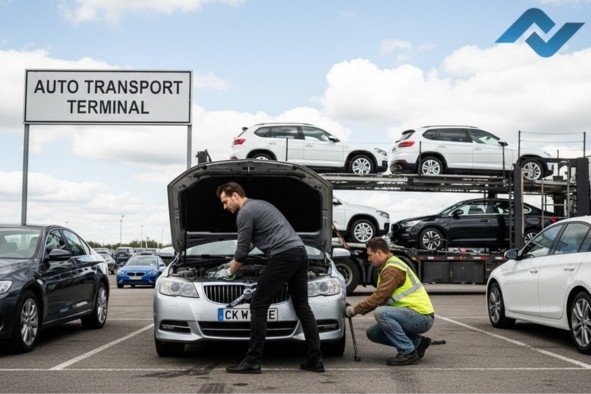
How the Process Works in Terminal to Terminal Car Transport?
The customer requests a car shipping quote by providing details such as vehicle type, route, and preferred terminal. Once confirmed, the broker or carrier issues booking documents that include estimated cost, insurance details, and pickup window.
Booking and Scheduling
The customer requests a car shipping quote by providing details such as vehicle type, route, and preferred terminal. Once confirmed, the broker or carrier sends booking documents. These include the estimated cost, insurance details, and pickup window.
Vehicle Drop Off at the Origin Terminal
The customer drops off the car at a terminal, depot, or storage lot close to a major transport route. At check in, the staff issues a Bill of Lading (BOL) that records the vehicle’s condition. The terminal staff inspects for visible scratches, dents, or modifications before loading.
Loading and Consolidation
An open carrier or enclosed trailer loads the cars, depending on the service type. Terminals help carriers group many vehicles on the same regional or cross country route. This boosts cost efficiency and cuts down on empty mileage.
Transit Across Routes
The carrier moves vehicles along interstate highways, regional roads, or cross border corridors. GPS tracking and driver updates keep customers informed. Travel time depends on distance, fuel prices, traffic, and seasonal demand.
Vehicle Arrival and Pickup at the Destination Terminal
At the destination terminal, the team unloads the car with great attention to detail. After that, someone inspects it again using the original BOL. Customers or their representatives collect the vehicle after signing the final delivery documents.
What are Transport Options Available in Terminal to Terminal Shipping?
Terminal to terminal auto shipping provides various transportation options. Open carrier transport, enclosed car transport, Specialty Vehicle Shipping, Expedited Car Transport. These methods differ in cost, protection, and specific uses. Licensed carriers take care of each option and adjust it for different vehicle types.
Open Carrier Transport
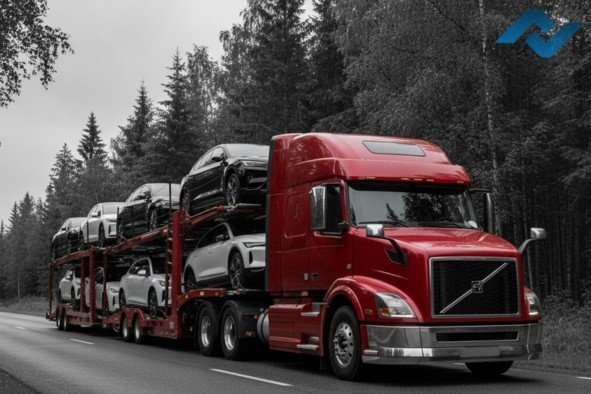
Open carrier transport is the most common and affordable option. Workers load vehicles onto a multi level trailer exposed to the elements. It is ideal for sedans, SUVs, and daily use cars. A Toyota Camry shipped from Atlanta, GA, to Chicago, IL costs less per mile on an open carrier than on enclosed trailers.
Enclosed Carrier Transport
Enclosed transport provides maximum protection by loading vehicles into covered trailers. This option shields against weather, dust, and road debris. People prefer classic cars, sports models, and luxury vehicles.
Specialty Vehicle Shipping
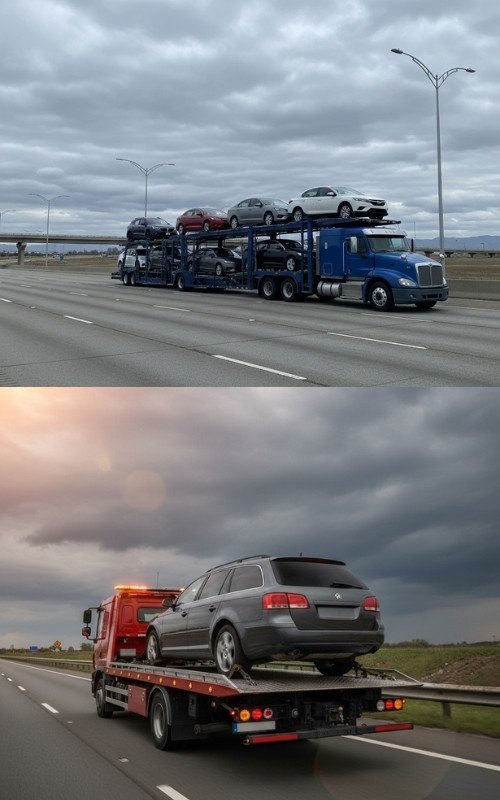
Speciality transport handles oversized vehicles, motorcycles, and inoperable cars. Carriers use flatbeds, lowboys, or special gear for unique sizes and weights. For example, shipping a non running Ford F 350 from Phoenix, AZ, to Denver, CO, needs a flatbed with winching tools.
Expedited Car Transport
Expedited service shortens delivery by prioritizing the vehicle in carrier schedules. It works well for quick moves or urgent transfers. For example, a corporate relocation from New York City to Dallas, TX, uses expedited transport to get a company car there in just 3 days.
How Much Does It Cost for Terminal to Terminal Auto Shipping?
Terminal to terminal auto shipping usually costs between $500 and $1,200. The price depends on distance, transport type, and vehicle size.
Rates are usually lower than door to door services because customers drop off and pick up cars at designated terminals.
This model reduces driver travel time. It saves fuel costs and allows carriers to use fewer vehicles on the same route. customers’ potential savings of $100 to $300 or more.
| Route Type | Example (Origin → Destination) | Distance (Miles) | Open Carrier Cost | Enclosed Carrier Cost |
|---|---|---|---|---|
| Local | Phoenix → Tucson | 120 | $300 – $450 | $400 – $600 |
| Regional | Houston → Atlanta | 800 | $600 – $850 | $850 – $1,050 |
| Cross Country | Los Angeles → Miami | 2,700 | $1,000 – $1,200 | $1,300 – $1,500 |
Example: Shipping a sedan from Houston, Texas, to Miami, Florida, is around $850. This covers an open carrier terminal to terminal service for a distance of 1,200 miles. Shipping in a closed trailer can cost $1,200. This price is common during peak months.
Read to ship your car to your New home
Factors Affecting Shipping Cost:
Distance: Short routes under 500 miles cost $400 to $700. Long routes over 1,500 miles can range from $1,000 to $1,200.
Transport Type: Open carriers average $0.50 to $1.00 per mile. Enclosed auto transport averages $1.00 to $1.50 per mile for added protection.
Vehicle Size: Sedans and small cars are cheaper to ship. SUVs, pickup trucks, and large vehicles cost an extra $150–$300 per shipment.
Seasonal Demand: Peak months, like snowbird season or summer, can increase rates by 15% to 25%. This happens because there are fewer carriers available.
Terminal Storage Fees: Many terminals allow 2 to 3 free storage days. After that, daily holding charges of between $25 and $50 may apply.
Terminal to terminal shipping is a choice for snowbirds, college students, dealerships, and those relocating. They like it because it’s affordable and offers flexible schedules. Door to door shipping offers convenience, but terminal service is better for your wallet. It’s a smart choice, especially for cross country vehicle moves.
Transit Time frames for Terminal to Terminal Shipping
Terminal to terminal auto transport delivery times depend on distance, route, and carrier scheduling. Short routes under 500 miles take 1 to 3 days. Medium routes, from 500 to 1,500 miles, need 3 to 7 days. Long hauls over 1,500 miles usually require 7 to 14 days. Carriers generally offer a pickup window of 1 to 3 days after booking. Drivers will inform customers before loading at the origin terminal.
Most solo drivers cover 400 to 500 miles per day, while team drivers handle up to 800 to 1,000 miles per day, reducing the delivery window. Short local routes are quicker. They stick to established lanes. Cross country moves take longer. They require more staging and rest stops.
Transit times depend on outside factors like traffic, road work, and seasonal demand. This is especially true during winter when snowbirds migrate. Enclosed carriers often take more time than open carriers. Enclosed trailers handle fewer vehicles, so loading is more specialized and requires precise handling.
When to Choose Terminal to Terminal Car Shipping?
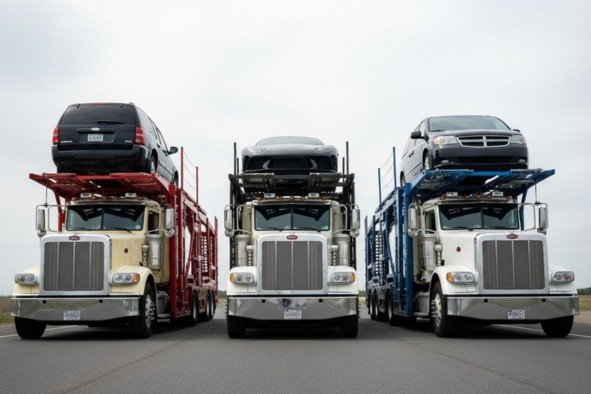
Terminal to terminal car shipping is best when cost savings matter more than convenience. Customers drop off and pick up vehicles at specific terminals. This cuts carrier travel time and lowers the shipping rate. This service is great for long distance moves, seasonal snowbird routes, and multi vehicle relocations. It helps keep your budget in check.
Customers frequently pick terminal facilities. This group includes students, families with several cars, and auction buyers from out of state. They choose this option because it’s tough and costly for carriers to reach remote areas. This service is also useful when large trucks cannot easily navigate narrow city streets.

| Feature | Terminal to Terminal Car Shipping | Door to Door Car Shipping |
|---|---|---|
| Pickup & Delivery | Customer drops off and collects at designated terminals | Carrier collects and delivers at customer's address |
| Cost | Lower overall cost due to centralized terminals | Higher cost for extra convenience and direct routing |
| Transit Speed | Faster transit since carriers avoid multiple residential detours | Transit may take longer with added stops along the route |
| Accessibility | Best for customers near metro areas or major highways | Best for remote or hard to reach locations |
| Security & Storage | Vehicles stored at fenced, monitored terminal facilities if needed | Vehicle handed directly to the customer without storage delays |
Example: A snowbird in Chicago ships a sedan to Phoenix using terminal to terminal car shipping. The vehicle is dropped at a city terminal, saving $200. A family moving from Dallas to a rural area likes door to door shipping. The carrier delivers their belongings right to their new home, so they avoid terminal travel.
What Documents Are Needed for Terminal to Terminal Car Transport?
Terminal to terminal vehicle transport needs a few important documents. You’ll require a Bill of Lading, a photo ID, and proof of insurance. Auto transport companies need these documents. Legal documents show ownership, provide insurance during transport, and note the vehicle’s condition.
Bill of Lading (BOL)
The inspection and delivery receipt signed at both terminals. It documents the vehicle’s condition before and after transport.
Photo ID
A valid driver’s license or passport is required to confirm customer identity at pickup or drop off.
Vehicle Registration & Title
These prove legal ownership and are often required for interstate transport.
Insurance Proof
Shows the vehicle has valid coverage in addition to the carrier’s cargo insurance.
Lien holder Authorization (if financed)
Needed when a vehicle is still under a loan or lease agreement.
Absent Owner Authorization
If someone else drops off or picks up the vehicle, you must provide a signed permission form.
Is My Vehicle Fully Insured During Terminal to Terminal Transport?
Yes, car carrier companies offer insurance coverage ranging from $100,000 to $250,000 per vehicle, depending on the carrier and trailer type.
Carrier Liability: Protects you from damage during loading, transit, and unloading at the terminal.
Cargo Insurance: Provides financial protection for the full vehicle value in case of accidents, theft, or fire.
Inspection Reports: The team notes the condition on the Bill of Lading at drop off. They check it again at delivery.
Customer Insurance: Personal auto policies can offer secondary coverage. However, the carrier’s policy is the primary one when transporting.
Example: A carrier insures a classic car shipped from a Los Angeles terminal to a Dallas terminal for up to $250,000 under its cargo policy. The inspectors examine the vehicle at both ends, and the shipping company files any claim using the signed Bill of Lading.
How Do I Prepare My Car for Terminal to Terminal Shipping?
To get ready for terminal to terminal car shipping, use this brief checklist. It checks for accuracy, safeguards your vehicle, and complies with FMCSA standards.
Step 1: Clean the Vehicle. Clean the outside and clear the inside. This helps the carrier note the vehicle’s condition on the Bill of Lading. Dirt or clutter can hide scratches and slow down inspection.
Step 2: Remove Personal Items. Empty the trunk and cabin. Carrier liability and insurance apply only to the vehicle itself, not to personal belongings.
Step 3: Check Basic Functions. Make sure you charge the battery, fill the fuel tank to about one quarter, and check for any visible fluid leaks. These checks prevent loading delays at the terminal.
Step 4: Secure Exterior Parts. Fold in mirrors, retract antennas, and remove add ons like roof racks or spoilers. Doing so reduces the chance of damage during loading and unloading.
Step 5: Inspect Tires and Brakes. Confirm that the tire pressure is at the correct level and check the brakes for proper operation. Both are essential for safe maneuvering on the carrier’s ramps.
Step 6: Prepare Keys and Documents. Give a spare key to the carrier. Get these documents ready: title, registration, proof of insurance, and bill of lading. This is important for condition checks at pickup and delivery terminals.
What Are Advantages of Terminal to Terminal Car Shipping?
Terminal to terminal car shipping is the better choice. It lowers transport costs. It provides flexible scheduling. It connects to a larger carrier network. Customers enjoy secure storage, quick dispatch on busy routes, and reliable delivery times.
Lower Cost: Terminal to terminal shipping cuts out residential pickup and delivery. This saves time for drivers and uses less fuel. On most routes, this approach is 10% to 20% cheaper than door to door service because carriers operate more efficiently.
Flexible Scheduling: Customers can drop off a vehicle at the starting terminal and pick it up at the destination. This is helpful for moves with uncertain dates.
Wider Carrier Network: Terminals serve as hubs for open carriers, enclosed carriers, and specialty trailers. Carriers can dispatch faster and lower costs by bringing different vehicles together in one place.
Secure Storage: Many terminals provide fenced lots, surveillance cameras, and on site staff. These measures reduce theft and damage risks while vehicles are stored before pickup or after early arrival.
Route Efficiency: Carriers avoid neighborhood detours by staying on major highways such as I-10, I-40, and I-95. This reduces delays, lowers fuel consumption, and minimizes wear on trucks.
Scalable for Multi Vehicle Shipping: Central drop off and pickup allow families, dealerships, and auto auctions to send multiple vehicles at once. This can cut the cost per vehicle by up to 15%.
Nationwide Availability: Terminals are primarily located in large cities. This helps most customers access them easily. It also means better carrier availability during busy times.
| Pros (Advantages) | Cons (Limitations) |
|---|---|
| Lower Cost: On average 10–20% cheaper than door to door shipping. | Extra Travel: Customers must drive to the origin terminal and from the destination terminal. |
| Flexible Scheduling: Drop off and pick up when convenient. | Storage Fees: Long storage at a terminal may add daily charges. |
| Secure Storage: Vehicles held in fenced, monitored lots with 24/7 surveillance. | Limited Terminal Locations: Rural areas may lack nearby terminals. |
| Carrier Network Access: Terminals connect with open, enclosed, and specialty carriers for faster dispatch. | Less Convenience: No direct door to door delivery, requires customer effort. |
| Multi Vehicle Friendly: Efficient for families, dealerships, or auctions shipping multiple cars. | Longer Wait Times: If a terminal is busy, dispatch may be delayed. |
| Route Efficiency: Carriers stick to major highways (I-10, I-40, I-95) for faster cross country transit. | Insurance Limits: Some policies only cover damage during transit, not while parked at a terminal. |
Book Our Terminal to Terminal Car Shipping Services Today!
Our Customers Auto transport reviews
Frequently Asked Question
Can I track my vehicle during transport?
Yes. Carrier updates and GPS systems check vehicles shipped terminal to terminal. Customers receive status from dispatch or drivers. Not all terminals offer live online tracking. However, FMCSA regulated carriers need to confirm pickup, transit status, and delivery timing. This ensures transparency and accountability.
What are the payment methods for terminal to terminal?
Payment options include credit cards, debit cards, electronic transfers, and certified checks. Some carriers accept digital wallets such as PayPal or Zelle. FMCSA-compliant brokers usually get paid after they assign a carrier. The cargo pickup or delivery at the terminal pays the full balance.
What’s the cancellation policy?
Most companies allow cancellation before dispatch without penalty. Once you assign a carrier, you may incur administrative fees between $50 and $100. Policies align with FMCSA guidelines. They balance customer flexibility with carrier schedules and costs. Written terms appear in the service contract.
What if I only need to use a terminal at one location?
Yes. Customers may book terminal-to-door or door-to-terminal service instead of full terminal-to-terminal. For example, someone can drop a vehicle at a Phoenix terminal and deliver it to a residence in Dallas without any stops. This hybrid option balances convenience with reduced shipping expense.
Is terminal to terminal shipping cheaper than door to door?
Yes. Terminal to terminal shipping usually costs 10–20% less. This is because customers pick up and drop off their vehicles themselves. Carriers save mileage, fuel, and urban navigation time. But, customers must consider that delays in pickup or drop off can lead to terminal storage fees, which can offset some of the savings.
How do I inspect my car before and after terminal to terminal shipping?
Inspection follows FMCSA protocol. At drop off, a carrier issues a Bill of Lading documenting current conditions with photos or notes. At delivery, someone rechecks the vehicle against this report. Any new damage must be recorded immediately to support claims under cargo insurance.
Where are the terminals located for terminal to terminal car shipping?
Terminals are usually near metropolitan areas, highway corridors, or transport hubs. For example, in Texas, they position facilities near Houston, Dallas, and San Antonio. Carriers prefer accessible lots with secure fencing and 24/7 surveillance. When you book, you confirm the exact addresses.
Is terminal to terminal car shipping available nationwide?
Yes. Licensed auto transport networks operate across the United States. Most major states and interstate highways host terminals. Availability changes by region. National carriers usually link the West Coast, Midwest, and East Coast via major urban shipping hubs.
What are the scheduling options for terminal to terminal car shipping?
Scheduling depends on carrier availability and customer flexibility. Standard service offers pickup within 2–5 business days after booking. Expedited options focus on faster loading. Customers may select specific windows at an added cost. Delivery timing varies by route length, season, and terminal workload.
What exact terminals serve terminal to terminal car shipping in my city?
Terminal addresses depend on the assigned carrier’s network. Customers receive confirmed locations after booking. For instance, Houston has designated terminals close to I-10 and Beltway 8. Availability varies by city. Brokers give directions and gate access info before you drop off the vehicle.
How long does terminal to terminal shipping usually take across the country?
Cross country terminal to terminal transport usually requires 1-7 days. For example, moving a vehicle from Los Angeles to New York spans about 2,800 miles. Delivery time depends on distance, weather, traffic, and carrier route. FMCSA driving limits of 500 miles daily also apply.
Summary
Terminal to terminal car shipping is a service for transporting vehicles. You drop off your car at one terminal and pick it up at another. This service uses licensed carriers regulated by FMCSA and USDOT. Costs range from $500 to $1,200 depending on distance, transport type, and vehicle size. Average delivery times range from 1 to 7 business days. The Bill of Lading notes the inspections. There’s also protection through cargo insurance and the Carmack Amendment. The service saves money compared to door to door shipping. However, customers need to travel to terminals.